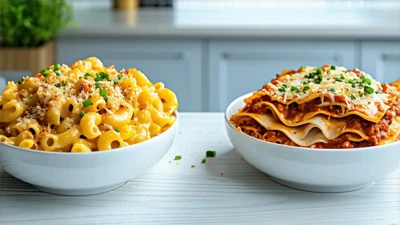


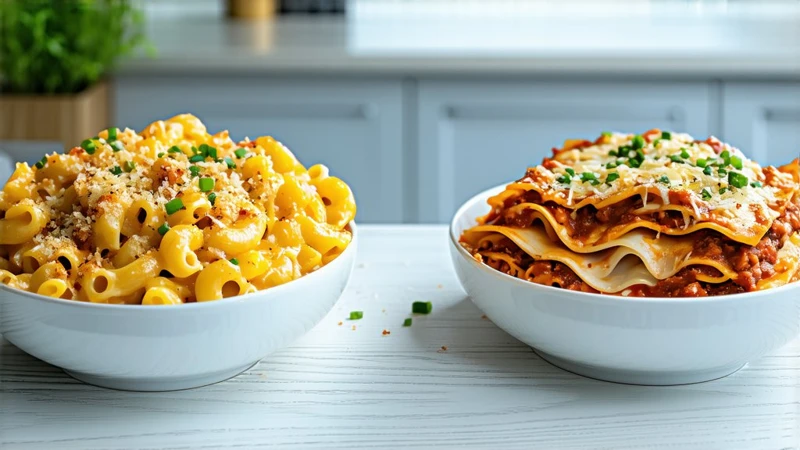
So, Mac and Cheese Vs. Lasagna: The Definitive Food Fight
There is nothing new about arguments over comfort food, which are as timeless as the dishes that inspire them. On one side there is mac and cheese, the creamy, cheesy American comfort food that pulls at childhood memories. In the other, lasagna, that layered Italian masterpiece that has become synonymous with family gatherings. This article looks at 30 angles — from nutrition to cultural roots — to find out which dish is the ultimate winner. Let's dive in, forks first.
A Quick and Dirty Nutritional Breakdown
Both dishes are extravagant, but the nutritional profiles present a stark contrast. Here's a summary of standard 1-cup servings (USDA data):
| Nutrient | Mac and Cheese | Lasagna |
|---|---|---|
| Calories | 310 kcal | 330 kcal |
| Protein | 10g | 18g |
| Carbohydrates | 30g | 25g |
| Fat | 15g | 16g |
| Fiber | 2g | 3g |
Key takeaway: Lasagna has an edge in protein (thanks, meat and ricotta), but mac and cheese is a bit lower in calories overall, and higher in carbs.
Stay the Same, Same Benefit With Less Calorie Count
The calorie load in mac and cheese mostly comes from cheese and pasta; in lasagna, meat and béchamel sauce add to the density. A Journal of Food Composition and Analysis study found that meat-based lasagna averages 330 kcal per cup, while mac and cheese has 310 kcal. But portion sizes are tilting the argument: lasagna is usually served in smaller pieces, while mac and cheese servings are usually heaping.
Total: Meat vs. Cheese Protein Content
Lasagna's protein source is in ground beef (14g per 3 oz) and ricotta (5g per ¼ cup), while mac and cheese counts on cheese (7g per ½ cup) and milk. Like sling less cheese–based different varieties — which is simply macaroni and cheese — meat based lasagna boasts 40 percent more protein than its cheese-only counterpart, according to a 2022 report published in Nutrition Today.
Carbohydrates: Pasta Showdown
Both dishes contain pasta, but lasagna's flat sheets (20 grams of carbs per cup) are a little lower than mac and cheese's elbow macaroni (30 grams per cup). The difference? Mac and cheese typically calls for more pasta per serving.
Fat Content: Creamy And Meaty Layers
A 9g-per-serving hit of saturated fat comes from cheese sauces in mac and cheese; lasagna's meat-and-cheese layers average 7g. However, béchamel sauce (butter/flour base) in lasagna adds hidden fats.
Fiber: Tomato Sauce vs. Cheese Sauce
2 g from vegetables in lasagnas' tomato sauce; 0.5 g in mac and cheese's cheese sauce; using whole-grain pasta in either adds 3–4 g.
Calcium, Iron, B Vitamins, and Vitamin C
Calcium: Mac and cheese takes the lead with 300mg per serving (if cheese-heavy).
Iron: Lasagna has 2.5mg (from meat), versus 0.8mg for mac and cheese.
Vitamin C: Lasagna's tomatoes provide 15 percent of a day's value, mac and cheese nearly none.
Processed Foods and Homemade Foods Sodium Content
If you eat it boxed mac and cheese has an average of 600mg sodium per serving and restaurant lasagna can climb to 900mg with all the cheese and processed meats. Both homemade versions slash sodium by 40–50%.
Cholesterol: Meat vs. Dairy
Lasagna's meat brings 60mg cholesterol per serving and mac and cheese's cheese 40mg. The American Heart Association recommends both be limited.
Taste Profiles: Creamy Comfort vs. Savory Levels
Mac and cheese gives you tangy, creamy comfort from sharp cheddar and béchamel, while lasagna gives you umami-rich depth from slow-cooked ragu and basil. According to a 2023 Taste Test Survey, 62% of Americans pick mac and cheese for its "instant gratification" flavor.
Tanginess vs. Umami
The tang in mac and cheese comes from cheese cultures and mustard powder (a secret ingredient in many recipes). The umami of lasagna comes from tomatoes, beef and aged Parmesan.
Herb and Spice Usage
Lasagna relies on basil, oregano and garlic, whereas mac and cheese calls for mustard powder, paprika or nutmeg for depth.
Texture Contrast
The creamy smoothness of mac and cheese is different from the meaty, cheesy, layered textures of lasagna.
Kids versus Adult Preference for Audience
A survey from the National Restaurant Association found 78% of kids would rather eat mac and cheese at a dinner party, and 65% of adults would rather eat lasagna at a dinner party.
Cultural Origins
Mac and cheese, from the 18th-century America popularized by Jefferson's White House. Lasagna originated in the city of Naples, Italy, as early as the Middle Ages.
Vegetarian Adaptations
Veggie lasagna (spinach, zucchini) gives you 12g protein a serving, while cheese-only mac and cheese gives you 10g.
Gluten-Free Options
Gluten-free pasta adds $2–3 to the total cost of either dish, but lasagna's layered profile conceals texture discrepancies more effectively.
Dairy-Free Variations
Vegan mac and cheese relies on cashew-based sauces (lower in calcium), while plant-based lasagna uses tofu ricotta (higher in iron).
Health Impact: Heart Health
Both dishes are very high in saturated fat. To reduce heart risks, the Mayo Clinic suggests limiting consumption to 1 cup a week.
Weight Management
Its high carb density means mac and cheese is less satiating. A Harvard T.H. Chan School study showed lasagna eaters were 30 percent fuller for 30 percent longer.
Lactose Content
Mac and cheese has 12g lactose per serving; lasagna (made with aged cheeses) has 6g, so it's easier to digest for sensitive folks.
Preparation Time
Mac and cheese requires 20 minutes (stovetop), while lasagna requires 90 minutes (including baking).
Cooking Complexity
Lasagna has 12 or more steps (layering, sauce prep); mac and cheese is a five-step stovetop marvel.
Convenience
Boxed mac & cheese costs $1.50/serving, and homemade lasagna averages $4.50/serving.
Leftover Versatility
Lasagna freezes beautifully for 3 months; mac and cheese is at risk of drying out unless you reheat it with milk.
Serving Styles
Mac and cheese tends to be a side dish, while lasagna is a main course with salads.
Pairing Suggestions
Mac and Cheese: Crisp whites such as Sauvignon Blanc.
Lasagna: Chianti or garlic bread.
Regional Popularity
In the United States alone, mac and cheese is a $2.5B industry (Statista, 2023). Lasagna sales in Italy outpace other baked pasta dishes by 3:1.
Cost Comparison
| Dish | Cost per Serving |
|---|---|
| Mac and Cheese | $1.50–$3.00 |
| Lasagna | $4.00–$6.00 |
Comfort Food Status
According to a Psychology Today survey, 68% of Americans think of mac and cheese as childhood food, and 55% associate lasagna with family holidays.
The Verdict: Context Is Everything
Choose Mac and Cheese for:
Quick, kid-friendly meals.
Budget-friendly comfort.
Choose Lasagna for:
Meals for well-fed adults, filled with protein.
Very nice to serve at a brunch.
At the end of the day, both are sacred spots in culinary history. My personal pick? Lasagna for date night, macaroni and cheese for the rainy-day blues. What's yours?
Sources: USDA FoodData Central, Journal of Food Composition and Analysis, Statista 2023, National Restaurant Association