

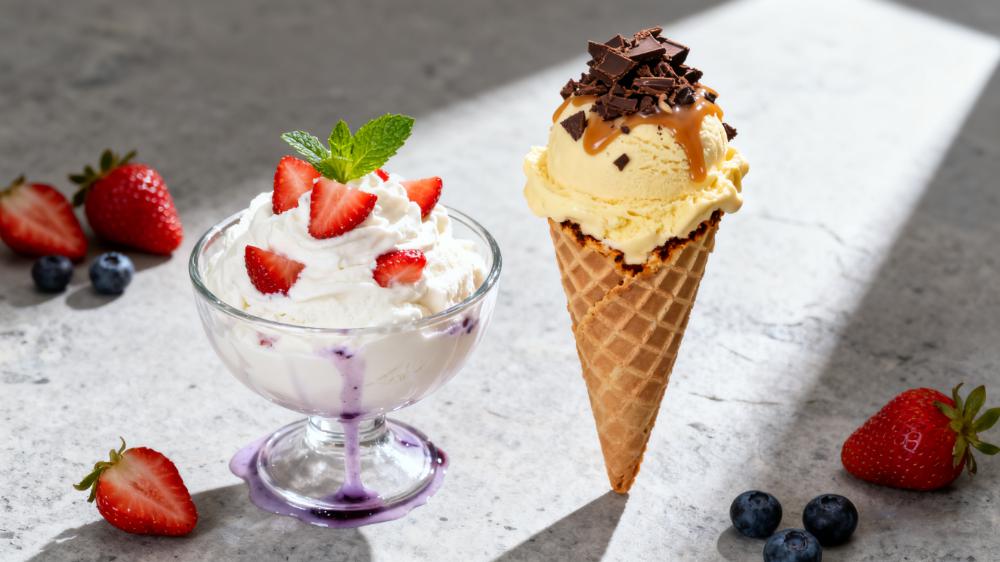
Frozen yogurt and ice cream are both classic frozen treats we love, but let's get real about that 'healthier frozen yogurt' claim. It's everywhere in ads and grocery aisles, but the truth? It depends entirely on what's actually in the cup. I've seen too many people swap ice cream for frozen yogurt thinking they're making a smart choice—only to end up with nearly as much sugar. Let's break down the actual numbers using real data (USDA and actual product labels) for a standard 1/2 cup serving.
Nutrition Snapshot: 1/2 Cup Serving
| Nutrient | Ice Cream (Regular) | Frozen Yogurt (Plain) | Frozen Yogurt (Flavored) |
|---|---|---|---|
| Calories | 250 | 150 | 220 |
| Total Fat (g) | 14 | 2.5 | 7 |
| Saturated Fat (g) | 9 | 1.5 | 4 |
| Sugar (g) | 24 | 12 | 28 |
| Protein (g) | 4 | 5 | 3 |
| Calcium (mg) | 120 | 150 | 130 |
| Probiotics (CFU) | 0 | 0 (most brands) | 0-50 million (varies) |
Source: USDA FoodData Central (2023), manufacturer labels (Chobani, Häagen-Dazs, Breyers)
What Actually Matters
1. Fat? Yeah, frozen yogurt wins here—but it's not the whole story
Plain frozen yogurt has way less fat (2.5g vs. 14g in ice cream), which is great for heart health. But here's the catch: many low-fat ice creams pump in extra sugar to make up for the missing fat. So you're trading one thing for another, not really winning.
2. Sugar? This is where frozen yogurt often loses
Flavored frozen yogurt (28g sugar) frequently has MORE sugar than regular ice cream (24g). Why? Because of those fruit syrups, chocolate chips, and sweet toppings. The American Diabetes Association says both can spike blood sugar similarly in normal portions. If you're watching your sugar, plain frozen yogurt (12g sugar) is the only version that might actually be a slight win.
3. Probiotics? Don't believe the hype
Yeah, they say 'probiotic' on the label, but most frozen yogurts don't have live cultures. A 2022 study found only 30% actually delivered what they promised—and even then, the count (50 million CFU) is 100x lower than what's needed for real benefits (1 billion+ CFU). Plus, freezing and acidity kill the good bacteria before you even get to it.
4. Calcium & protein? Close, but not a big deal
Frozen yogurt has a tiny edge in calcium (150mg vs. 120mg), but that's barely a dent in your daily needs (300mg). Protein's similar (4-5g), but ice cream's higher fat might keep you fuller longer.
Real Talk: What to Actually Watch For
Portion size matters way more than you think: That 1/2 cup serving of ice cream? People often eat a full cup (500 calories). Frozen yogurt's lower calories per serving vanish if you double up.
Flavored = sugar trap: If you're getting a 'chocolate swirl' frozen yogurt, it's adding 5-10g extra sugar. Stick to plain if you want to call it a 'healthier' choice.
Real healthy swap? Try this: Skip the frozen yogurt aisle and grab plain Greek yogurt (10g sugar, 10g protein) or frozen berries with a sprinkle of nuts. You get more protein, fiber, and way less sugar.
The Bottom Line
Is frozen yogurt healthier than ice cream? Honestly? Not really. Its lower fat is balanced out by sugar that's often higher, and the probiotic claims are mostly marketing fluff. The only time frozen yogurt wins is if you pick plain, low-sugar versions and stick to the serving size. For blood sugar or weight management, unsweetened frozen berries blended with chia seeds beats both by a mile.
My take: Neither frozen yogurt nor ice cream is a 'healthy' dessert. They're both treats. But if you're going to have one, choose plain, watch your portion, and skip the sugary toppings. And yeah, the 'healthier' label? It's time to stop believing it.