

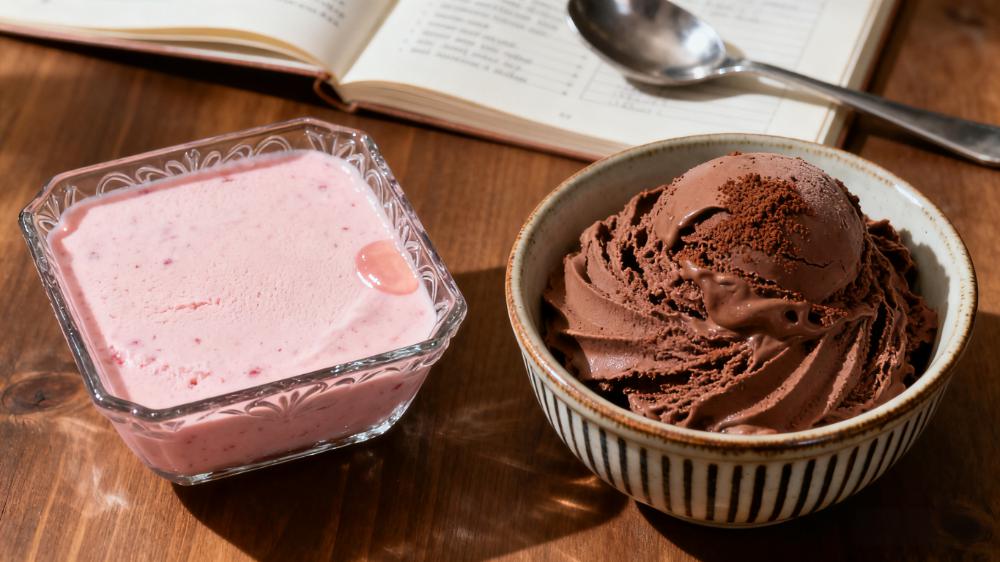
You've probably noticed how 'ice cream' and 'frozen dairy dessert' get thrown around like they mean the same thing. Truth is, they're not interchangeable—and the FDA's rules make that crystal clear. Let's cut through the confusion with real talk about what actually goes into those tubs.
What the Rules Actually Say
The U.S. Food and Drug Administration has been clear for decades about this. Under their rules (21 CFR 135.110 for ice cream, 135.120 for frozen dairy dessert), there's a hard line on what counts as ice cream. It's not just marketing—these are legal definitions you'll find on every product label.
| Key Difference | Ice Cream | Frozen Dairy Dessert |
|---|---|---|
| Minimum Milkfat | 10% (that's 10g per 100g) | 2% (just 2g per 100g) |
| Total Milk Solids | 20% (milkfat + nonfat milk solids) | 10% (same calculation) |
| Labeling | Must say 'ice cream' if it meets the standard | Can't use 'ice cream'—has to say 'frozen dairy dessert' |
Source: FDA regulations 21 CFR 135.110 & 135.120 (2023)
Let's Bust Some Myths
| Myth | What's Actually True |
|---|---|
| All frozen dairy is ice cream | False. If it's under 10% milkfat, it legally can't be called 'ice cream'—it has to say 'frozen dairy dessert' or similar. |
| It's just 'cheap ice cream' | Not really. It's a separate product category. Brands use skim milk to hit that 2% fat minimum, not because it's cheaper to make. |
| Ice cream always has more fat | True by definition—ice cream must have at least 10% milkfat, while frozen dessert only needs 2%. |
| It's unhealthy | Misleading. Lower fat doesn't mean healthier. USDA data shows a 100g serving of frozen dessert averages 22g sugar vs. 20g in ice cream. Sugar content matters just as much as fat. |
What the Nutrition Really Looks Like
| Product | Calories (100g) | Fat (g) | Sugar (g) | Protein (g) |
|---|---|---|---|---|
| Ice Cream (Regular) | 207 | 12.7 | 19.5 | 3.7 |
| Frozen Dairy Dessert | 170 | 3.2 | 22.1 | 2.8 |
Source: USDA FoodData Central (2023, average values)
Here's the thing: frozen dessert usually has less fat but more sugar than ice cream. That's why calling it 'healthier' just because it's lower in fat? Totally missing the point. The sugar difference matters—22g vs. 19.5g per 100g is meaningful.
Why the Confusion Keeps Happening
Let's be real: marketing plays a big role. Brands like Häagen-Dazs use 'ice cream' legally because they hit that 10% fat mark. But budget brands? They call it 'frozen dairy dessert' to stay compliant. Most people don't even check the fat percentage on the label—so they assume everything in the freezer is the same. The FDA's 2022 report showed 15% of 'ice cream' labels didn't meet the standard. That's why clear labels matter.
The Bottom Line
Ice cream and frozen dairy dessert aren't synonyms—they're legally different. If you see 'ice cream' on the label, it must have at least 10% milkfat. If it's lower, it's got to say 'frozen dairy dessert.' Don't trust the name—check the fat percentage and sugar content instead. For makers, it's not about trends; it's about following the rules. And for you? It means making choices based on facts, not marketing fluff.
So next time you're grabbing a pint, take a second to check that label. You'll know exactly what you're getting—and why it matters.